
A low haemoglobin result in an adult with sickle cell disease does not automatically call for iron tablets, intravenous iron or a blood transfusion. You will be able to identify the tests that separate sickle-cell anaemia from treatable iron deficiency and understand when disease-modifying medicines, transfusion or specialist review are appropriate.
Key takeaways
- Confirm the cause of low haemoglobin before taking iron.
- Use iron only when tests confirm iron deficiency.
- Separate disease-modifying treatment from iron replacement.
- Seek urgent assessment for a sudden haemoglobin drop or severe symptoms.
A low haemoglobin result needs a cause, not an automatic prescription
A low haemoglobin level does not prove iron deficiency in an adult with sickle cell disease. Clinicians compare it with your usual haemoglobin, genotype, symptoms and reticulocyte count, then ask whether the fall is gradual or sudden.
Sickle-cell haemolysis often produces a raised reticulocyte count, bilirubin and lactate dehydrogenase, with low haptoglobin; the target is symptom control and prevention of complications, not a forced return to the normal adult range.
| Possible cause | Clues clinicians look for | Tests that help |
|---|---|---|
| Sickle-cell haemolysis | Stable pattern, jaundice, high reticulocytes | Complete blood count, reticulocyte count, bilirubin, lactate dehydrogenase, haptoglobin |
| Iron deficiency | Low ferritin and transferrin saturation, blood loss | Ferritin, transferrin saturation, blood-loss assessment |
| Thalassemia | Lifelong microcytosis or an unusual baseline | Red-cell indices, haemoglobin analysis |
| Aplastic anaemia | Sudden low haemoglobin with low reticulocytes and other low cell lines | Complete blood count, reticulocyte count, specialist assessment |
| Kidney disease or acute blood loss | Reduced kidney function or bleeding symptoms | Creatinine, bleeding evaluation, haemoglobin trend |
Haemoglobin analysis can clarify the genotype or identify a second haemoglobin disorder. A sudden fall needs prompt assessment for infection, splenic or hepatic sequestration, bleeding, aplasia, or another cause.
Do not start iron tablets, intravenous iron or iron-containing supplements without documented deficiency. Repeated transfusions can cause iron overload, so unnecessary iron adds risk without treating the main problem. The correct anemia treatment for adults with sickle cell disease depends on the identified cause.
When iron treatment is suitable—and when it can cause harm
Iron is suitable only when testing confirms iron deficiency, not simply because an adult with sickle cell disease has a low haemoglobin. Check ferritin and transferrin saturation alongside the clinical picture; inflammation can make ferritin appear normal or high, so interpret results with a haematologist.
Iron treatment becomes reasonable when there is documented deficiency from poor intake, menstrual or gastrointestinal blood loss, pregnancy-related demand, or another identified cause. The form and dose depend on severity, absorption, kidney function and tolerance.
- Do not start iron tablets, intravenous iron or iron-containing supplements if deficiency has not been established.
- Review transfusion history before prescribing: repeated simple transfusions can cause iron overload, and extra iron can worsen that burden without correcting sickle-cell haemolysis.
- During pregnancy, test rather than assume deficiency. Pregnancy increases iron requirements, but unnecessary supplementation still exposes someone with prior transfusions to avoidable risk.
- With kidney disease, gastrointestinal bleeding, chronic inflammation, liver disease or another cause of anaemia, treat that condition as well as any confirmed iron deficiency.
Transfusion is not routine anaemia treatment for adults with sickle cell disease. It may be appropriate for acute, clinically significant haemoglobin decline or a specific complication, but repeated transfusions can cause antibodies, delayed haemolytic reactions, hyperhaemolysis and iron overload.
Decisions should follow symptoms, the acute event, genotype and baseline haemoglobin—not a single number or a goal of reaching the normal adult range.
Disease-modifying treatment is different from treating iron deficiency
Hydroxyurea treats the sickling process, not iron deficiency. It increases fetal haemoglobin, reduces red-cell sickling, and lowers the risk of vaso-occlusive pain crises and acute chest syndrome. It can improve haemolytic anaemia for some adults, but the goal is fewer complications and better symptoms—not forcing haemoglobin into the normal adult range.
Hydroxyurea requires regular complete blood counts and dose adjustments. A falling neutrophil or platelet count, or another significant cytopenia, can require a temporary hold or dose reduction. Other disease-modifying options, such as crizanlizumab or L-glutamine, are selected according to genotype, complication history, kidney and liver function, pregnancy plans, and local availability.
They do not make unexplained anaemia safe to ignore.
A sudden haemoglobin fall needs urgent assessment against your usual baseline, with a reticulocyte count and examination for complications. Important possibilities include:
- Splenic or hepatic sequestration
- Parvovirus B19 aplastic crisis, which causes a very low reticulocyte count
- Acute chest syndrome or another infection
- Bleeding
- Delayed haemolytic transfusion reaction or hyperhaemolysis
Iron tablets, intravenous iron, and iron-containing supplements will not correct these causes. Unnecessary iron can add to iron overload, particularly after repeated transfusions. Treatment may instead require oxygen, antibiotics, fluids, pain control, red-cell transfusion, or specialist emergency care, depending on the confirmed cause.
When transfusion or advanced treatment becomes appropriate
A red-cell transfusion suits an adult when anaemia is sudden, severe or causing symptoms such as breathlessness, chest pain, fainting or heart strain. It may also be used for acute chest syndrome, stroke, major bleeding or carefully selected high-risk surgery.
It is not routine treatment for a stable low haemoglobin level, and surgery alone does not automatically justify transfusion.
Every transfusion plan must manage alloimmunisation and iron overload. Request extended matching for Rh and Kell antigens, not only ABO compatibility, and keep a record of transfusions and antibodies because delayed haemolytic reactions can be dangerous. Tell every hospital that you have sickle cell disease.
- Exchange transfusion may be considered for stroke, severe acute chest syndrome or another emergency requiring rapid reduction of sickled red cells. It needs specialist access, compatible blood, equipment and experienced staff; automated exchange can limit net iron accumulation compared with repeated simple transfusions.
- Chelation becomes relevant after transfusion-related iron overload, assessed with transfusion history, iron studies and liver or heart MRI. Do not start it from a single ferritin result.
- Allogeneic stem-cell transplant can be curative, but it is not routine anaemia treatment. Evaluate disease severity, organ function, donor availability, fertility plans, conditioning risks, graft-versus-host disease and transplant mortality jointly with sickle-cell and transplant specialists.
- Gene therapy may suit selected adults with severe disease despite standard treatment, after assessment at an experienced centre. Conditioning chemotherapy, infertility, organ function, long-term follow-up and eligibility criteria require explicit discussion.
What to look for in a specialist sickle-cell consultation
Choose a hematologist who treats adults with sickle cell disease, not only iron-deficiency anaemia. A sickle cell doctor in Pune should demonstrate experience with hydroxyurea monitoring, acute chest syndrome, transfusion reactions and antibodies, iron overload, and referral for transplantation or gene therapy when appropriate.
Bring these records to your sickle cell treatment consultation:
- Your genotype report, recent complete blood counts, baseline haemoglobin and reticulocyte count.
- Ferritin, transferrin saturation, bilirubin, lactate dehydrogenase, haptoglobin, creatinine and liver-test results.
- Every transfusion date, blood-group information and any recorded red-cell antibodies.
- A full medication list, including hydroxyurea, iron products, pain medicines and supplements.
- Pregnancy, contraception or fertility plans, plus vaccination records.
- Dates of pain crises, hospital admissions, acute chest syndrome, stroke or kidney problems.
Use this comparison when choosing a clinic:
| Setting | Evidence to look for | Why it matters |
|---|---|---|
| General anaemia clinic | Focus mainly on iron tablets and haemoglobin | It may miss sickle-cell haemolysis, transfusion iron overload or treatment complications |
| Sickle cell anemia specialist | Adult disease experience, hydroxyurea and transfusion monitoring | Treatment decisions depend on trends, reticulocytes and complications, not one haemoglobin result |
| Advanced sickle-cell centre | Exchange transfusion, iron-liver assessment, transplant and gene-therapy referral pathways | Complex treatment needs compatible blood, specialist equipment and long-term follow-up |
Whether you consult Dr Chandrakant Lahane or another clinician, ask who reviews your transfusion history, monitors kidney and liver safety, and coordinates fertility counselling before intensive treatment.
Related service
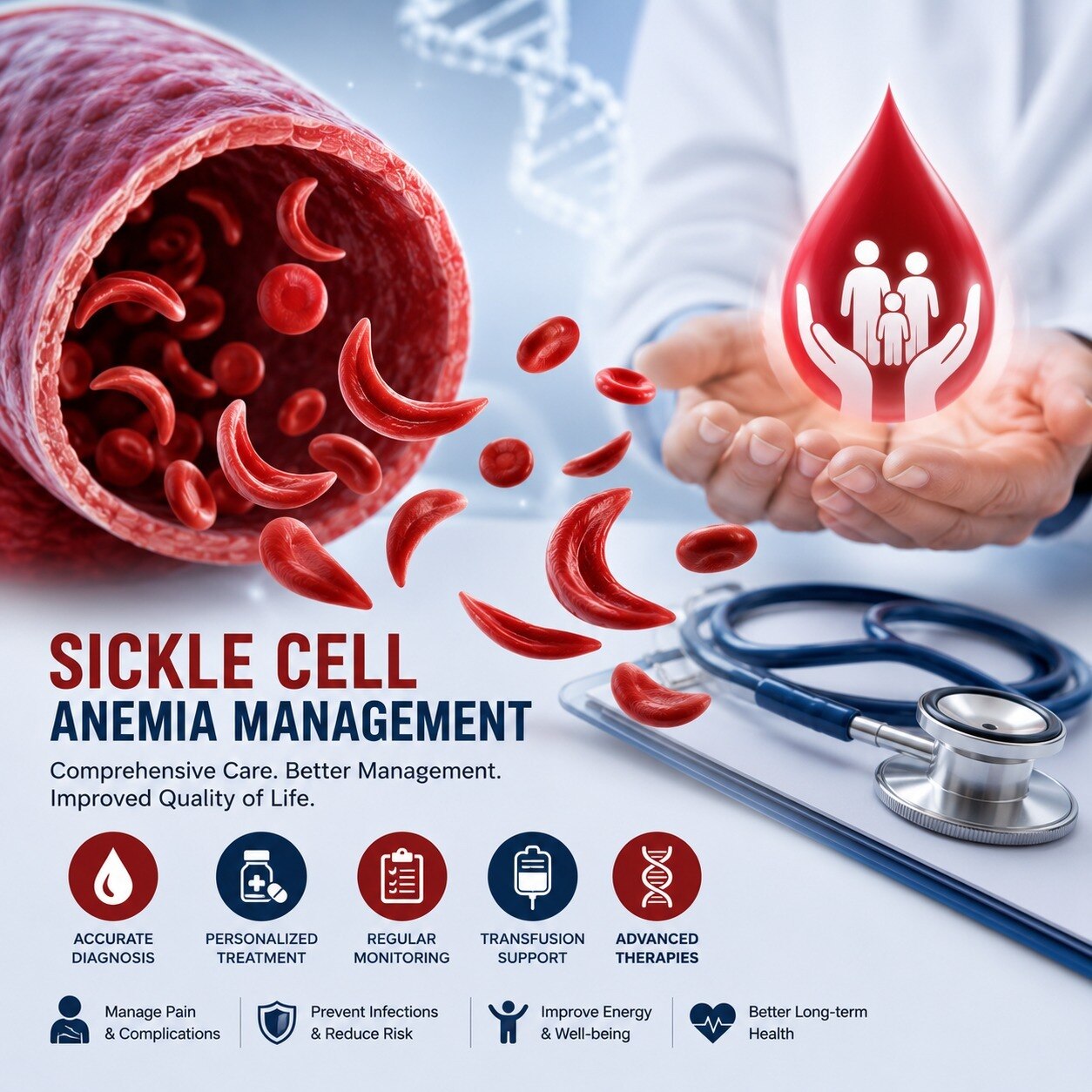
Sickle Cell Anemia Management Dr. Chandrakant Lahane provides comprehensive care for sickle cell anemia, an inherited blood disorder that affects the shape and function of red... View service → |
Frequently asked questions
Is iron treatment suitable for every adult with sickle cell disease?
No. Low haemoglobin does not prove iron deficiency. Iron treatment is suitable when blood tests confirm deficiency and a clinician identifies the cause.
When can iron treatment harm someone with sickle cell disease?
Unnecessary iron can contribute to iron overload, especially after repeated transfusions. Do not take iron without confirmed deficiency and medical supervision.
How is disease-modifying treatment different from iron treatment?
Iron replaces a confirmed nutrient deficiency. Disease-modifying treatment targets sickling and complications, so it is chosen according to genotype, symptoms and treatment history.
When might transfusion or advanced sickle cell treatment be appropriate?
A sudden haemoglobin fall, severe symptoms, acute complications or selected long-term risks can require transfusion or advanced treatment. A specialist decides after assessment.
What happens during a specialist sickle-cell consultation?
The clinician reviews your usual haemoglobin, genotype, symptoms, reticulocyte count, transfusion history, medicines and iron studies before recommending treatment.