

A fever during low blood counts, uncontrolled bleeding, severe breathlessness, confusion or rapidly worsening weakness needs emergency care, not a routine transplant appointment. If there are no acute danger signs, you can still speed a specialist review by identifying the right urgency, gathering complete records and asking where donor testing, admission and transplant care will occur.
Key takeaways
- Treat fever of 38°C or higher during low white-cell counts as an emergency.
- Bring biopsy reports, blood counts, treatment records, scans and donor information.
- Ask which transplant type, donor tests and treatment timeline apply to your case.
- Confirm who will manage admission, donor matching and post-transplant complications.
When is a transplant consultation an emergency, and when is it an urgent review?
A measured fever of 38°C or higher during a low white-cell count, uncontrolled bleeding, black stools, blood in vomit or urine, severe breathlessness, chest pain, new confusion, fainting, seizures, or rapidly worsening weakness is an emergency. Go to an emergency department or contact the treating hematology team immediately; do not wait for an outpatient appointment.
1. Treat these warning signs as time-critical complications, whether or not transplantation has been discussed. Take the current medicines and blood-test reports, but do not delay departure while collecting records.
2. Arrange an urgent but non-emergency review when the patient is stable after a new leukemia or marrow-failure diagnosis, relapse, worsening complete blood count, new abnormal marrow report, or results showing high-risk disease.
Contact the hematologist or transplant service within 24 to 72 hours of receiving the information and ask how quickly the records need review.
3. Use an urgent transplant consultation in Pune for rapid planning, not as a promise that transplantation will happen immediately. The team may first need pathology, flow-cytometry, cytogenetic or molecular-risk review, disease-response testing, HLA typing, infection screening, donor information, and heart, lung, kidney, liver, or functional assessments.
Infection treatment, transfusion support, or disease-control therapy may come first. If symptoms change while records are being reviewed, return to emergency care rather than waiting for the planned consultation.
Which patients need transplant evaluation, and which type of transplant is being considered?
A referral to a bone marrow transplant specialist near Hadapsar does not mean that transplantation is already indicated. Evaluation helps determine whether the expected benefit outweighs the risks.
Patients who may need evaluation include those with:
- Relapsed or high-risk leukemia
- High-risk myelodysplastic syndrome
- Severe aplastic anemia
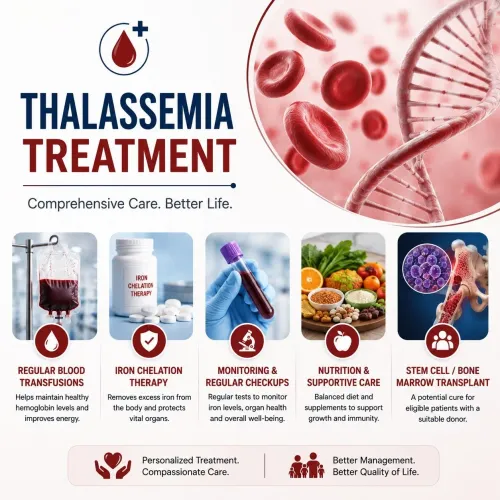
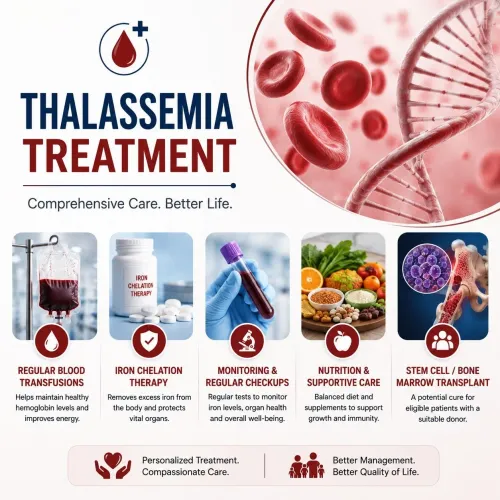
- Transfusion-dependent thalassemia
- Other marrow-failure conditions
- Selected lymphomas or myeloma
- Inherited blood disorders
- Certain immune diseases
The decision depends on the diagnosis, disease status, previous treatment, relapse risk, organ fitness and the patient’s goals. A specialist may recommend disease-control treatment, transfusions or observation instead of immediate transplant.
| Type | What it means | Key points |
|---|---|---|
| Autologous | Your own previously collected stem cells are returned after high-dose conditioning | Avoids donor-cell rejection and graft-versus-host disease, but can cause profound temporary cytopenias, infection, bleeding, mucositis, infertility and organ toxicity |
| Allogeneic | Stem cells come from another person | Requires donor and HLA assessment; graft-versus-host disease remains a distinctive risk |
An allogeneic donor may be a matched sibling, matched unrelated donor, haploidentical family member or cord-blood unit. HLA compatibility matters more than blood-group matching; ABO incompatibility does not automatically prevent transplant.
Ask whether the proposed graft will come from bone marrow, peripheral blood stem cells or an umbilical-cord blood unit. The choice depends on disease urgency, donor availability, center expertise and individual risk.
What will the first consultation review, and which records should you bring?
Expect a rapid assessment, not an immediate transplant decision. The specialist will review the diagnosis, treatment response, relapse history, transfusions, infections, medicines and current symptoms, then examine the patient and assess functional status. Missing pathology, risk results, donor information or organ tests can delay planning.
Bring these records, preferably in date order:
- Every CBC with differential, peripheral-smear report, bone-marrow aspirate and biopsy report, flow-cytometry report, cytogenetic or FISH result, molecular test and imaging report.
- A current medication list, allergy record, blood-group document and complete transfusion history.
- Discharge summaries, chemotherapy protocols, radiation records and infection-test results.
Ask which missing result is delaying a decision. Ask whether fertility preservation must happen before conditioning.
The team may request the following:
| Test or information | Why it may be needed |
|---|---|
| HLA typing for the patient and relatives | To assess donor compatibility |
| Donor-search information | To compare matched sibling, unrelated, haploidentical or cord-blood options |
| Repeat pathology review | To confirm diagnosis or disease risk |
| Infection screening | To identify risks before treatment |
| Heart, lung, kidney and liver tests | To assess conditioning safety |
Conditioning uses chemotherapy, with or without radiation, to suppress immunity and prepare marrow space for donor cells. Reduced-intensity conditioning may suit some medically vulnerable patients, but it still carries serious risks and is not interchangeable with standard myeloablative treatment.
Who handles donor matching, admission and complications after a Hadapsar consultation?
Proximity to a consulting room does not guarantee access to transplant care. Ask where conditioning, admission, graft infusion and post-transplant emergencies will actually be managed before choosing a stem cell transplant doctor in hadapsar.
A hematologist diagnoses blood disease and manages chemotherapy, transfusions and complications. A transplant physician assesses eligibility, selects the conditioning regimen, coordinates HLA typing and donor evaluation, and directs the transplant pathway.
The hospital transplant team performs donor-cell collection and processing, supervises conditioning admission and graft infusion, monitors infections, provides transfusion support and arranges post-transplant follow-up. Confirm that the facility has:
- An established transplant program with inpatient isolation, microbiology, blood-bank and transfusion support.
- Intensive-care backup, 24-hour clinical advice and a clear discharge pathway.
- Documented arrangements for donor-cell processing, emergency review and care after discharge.
Begin the donor search early. HLA typing and unrelated-donor or cord-blood searches take time, while a haploidentical family-donor route may be available when a fully matched donor cannot be found. Ask about matched sibling, matched unrelated, haploidentical and cord-blood options; blood-group matching alone does not determine suitability.
Ask how the hospital reports transplant outcomes, what complications it monitors and who answers urgent calls. Dr Chandrakant Lahane can contribute to the specialist discussion in Hadapsar, but the decision must include the hospital team delivering conditioning, graft infusion and emergency care.
Related service
Bone Marrow Transplant Dr. Chandrakant Lahane provides specialized consultation and comprehensive care for patients who may require a bone marrow or stem cell transplant... View service → |
What should you decide after the consultation, and how quickly should treatment planning move?
Leave the consultation with a written, disease-specific plan. It should identify the next decision, the evidence still missing and the date when the team will review it again.
| Option | What it means | Planning question |
|---|---|---|
| Transplant now | Disease control and fitness support proceeding | Which graft and donor are ready? |
| Induction or salvage first | Further treatment must reduce disease before transplant | What response is required, and by when? |
| Alternative or no transplant | Another treatment or supportive-care route is preferred | What benefit, risk and review date apply? |
Ask the team to record:
- Donor-search status, major alternatives, proposed graft source, expected admission length and recovery milestones
- Fertility-preservation options, transfusion needs, estimated costs and caregiver requirements
- For allogeneic transplant, prevention and monitoring of graft-versus-host disease in the skin, gut, liver, eyes, mouth and lungs
- The exact fever-reporting threshold, antimicrobial or antiviral prevention, vaccination timing, food and exposure precautions, and the day-and-night contact number
Arrange a reliable caregiver, transport, medication management and accommodation close enough for rapid return to the transplant centre. After a stable new diagnosis, relapse, worsening counts or an abnormal marrow result, seek specialist contact within 24 to 72 hours; contact the team sooner if symptoms change.
Do not expect an immediate final answer: pathology review, disease-response testing, HLA results and heart, lung, kidney or liver assessment can delay the decision.
Frequently asked questions
When is a transplant consultation an emergency?
A measured fever of 38°C or higher during a low white-cell count, uncontrolled bleeding, black stools, blood in vomit or urine, severe breathlessness, chest pain, new confusion, fainting, seizures or rapidly worsening weakness requires immediate emergency care or contact with the treating hematology team.
Which patients need a transplant evaluation?
Patients with blood cancers, bone marrow failure, certain inherited blood disorders or high-risk diseases may need evaluation. The hematology team determines whether an autologous transplant using your own cells or an allogeneic transplant using donor cells is appropriate.
What should I bring to the first transplant consultation?
Bring biopsy and pathology reports, complete blood counts, bone marrow examination results, scan reports, treatment and medication records, transfusion history, infection history and any available donor or HLA-typing information.
Who handles donor matching and complications after consultation?
The transplant team coordinates HLA testing and donor matching, admission planning, conditioning treatment, transplantation and monitoring for complications such as infection, graft-versus-host disease and organ problems.
What should I decide after the consultation?
Confirm the proposed transplant type, treatment goal, donor-testing plan, required investigations, expected admission timing, major risks, costs and the team responsible for urgent care and long-term follow-up.